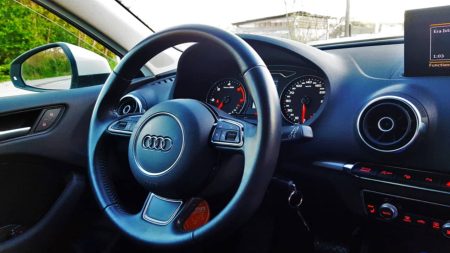
ABS is an anti-lock braking system that assists the driver for more effective braking. This modern technology has become essential to the safety of a car by preventing accidents.
Most of the time, when you brake suddenly, there are chances that the car tires will lose contact with the ground. This can cause a slippage which can be fatal.
It is to avoid this situation that ABS has been integrated into cars. The operation of your car’s ABS is indicated by a light on the dashboard. When the light stays off, it means there is nothing to worry about.
When the ABS light is on, it’s proof that something is wrong. This could be caused by a faulty ABS module, low brake fluid level or an ABS fuse problem.
Menu :
What is ABS?
ABS is an anti-lock braking system. It is designed to prevent your car’s brake from jamming while driving. When you drive, you may apply a lot of pressure to your brakes and you risk causing the car’s axle and wheels to lock up completely.
In cases where this type of incident happens while driving, the car starts to skid. Any minute you can lose control. This small, insignificant incident can get worse when you drive at high speed.
SEE ALSO: Car Starter Operation and Maintenance
What are the advantages of ABS?
The advantages of this anti-lock braking system are:
- Braking efficiency, especially during snow;
- Reduce the cost of insurance;
- Adds value to your car in the event of resale;
- Improves traction control
Braking efficiency, especially during snow
The braking system technology reduces the locking of your wheels and thus reduces the risk of skidding. It is even more effective in slippery conditions. It can be said that in snowy conditions, ABS saves lives by allowing the driver to maintain control over the car and avoid dangerous scenarios often seen when driving during snow.
Reduce insurance costs
If your car is equipped with an anti-lock braking system, this allows you to reduce your car insurance payment by simply reducing the risk of an accident.
Adds value to your car for resale
ABS adds value to your car. It’s common to see cars and trucks not having an anti-lock braking system at all. If so, know that you cannot sell your vehicle at a higher price because of this missing technology.
Improves traction control
The anti-lock braking system shares the same basic infrastructure as advanced traction technology, making it easier for manufacturers to install factory traction control, plus it makes your car perform better.
In addition to these benefits, the anti-lock braking system increases the life of your car’s tires, brake pads, brake calipers and everything else that braking can influence in your car.

SEE ALSO: Flat car battery: errors and tips for restarting
What are the reasons why your car’s ABS light is on?
Before we talk about why your car light is on, it’s important to note that it’s normal for it to be on when you start your car. This is because the ABS system performs an automatic check every time you start the engine.
The light flashes briefly at start-up on the dashboard. This means that the verification process is normal and there is no need to panic.
When the system light stays on longer, there is a problem. Generally, in the case of certain cars, when the light is on like this, the anomalies as mentioned below can be noticed by:
- A loud noise during the ABS system check process;
- The brake pedal pulses.
In case your car’s anti-lock braking system is working properly, the brake checks should be normal when the system is off.
There are multiple reasons why your car’s ABS light is on. Here are details on these reasons.
Faulty ABS module
The ABS system is linked to your car’s traction control system. Traction control is the system that ensures all four wheels of your cars are on the ground smoothly. When this system detects that one of the wheels is slipping irregularly, it cuts power to the motor in order to restore stable traction.
Since the ABS system and your traction control share the same module as traction control, it can have interference. Which means a problem with your car’s anti-lock braking system isn’t the only reason the ABS light is on.
To find out if it is indeed the ABS module of your car that is defective, try to check these points:
- The brakes no longer respond normally over time. If the brakes no longer work at all, this means that the ABS module is completely damaged;
- Rattling noises are heard when the car is stationary;
- Brake pads are more difficult to push.
To get a clear idea of what is happening with the ABS system, it is recommended to see a professional who will be able to diagnose your vehicle.
Low fluid levels in reservoir
Your car’s braking system is hydraulic. This means that to close the brake pads and stop the car, it uses the power of a cylinder which presses against a liquid. This means you need a constant fluid level in your brake system.
If there is a leak or evaporation of the fluid, the quantity of fluid may decrease and your brakes may fail. When this is the case, your ABS system may detect this problem and thus cause the ABS warning light to come on.
Damaged wheel speed sensors
The car’s speed sensors indicate how fast each wheel is spinning independently. When the wheel speed sensors detect an abnormality, they send a signal to the traction control system which makes adjustments.
The ABS system may turn on when one of the speed sensors is dirty or not working.
Your system is turned off
It may happen that you accidentally hit the switch for your ABS system, causing it to turn off. If you didn’t know, note that you may have the option to turn your car’s anti-lock braking system on or off.
When the system is turned off, the ABS light comes on, signaling that this safety feature is not activated in the car.
In other cases, when the ABS fuses are damaged, the ABS warning light comes on.

What to do when the ABS light is on?
When you are in traffic and the ABS light is on, you can safely drive your car and arrive at your destination. You can still use your normal brakes. But you need to be more careful because in an emergency, the anti-lock braking system will not respond.
Once at your destination, go directly to a garage for a diagnosis of your car to find out what is causing the problem.
Note that you are in greater danger when the ABS light and brake warning light are on simultaneously.
In this case, you must stop driving immediately. To be on the safe side, gradually reduce the speed of your car, turn off the engine and call a breakdown service.